Donaueschinger Musiktage 2026: Ziyi Tao on Steven Takasugi
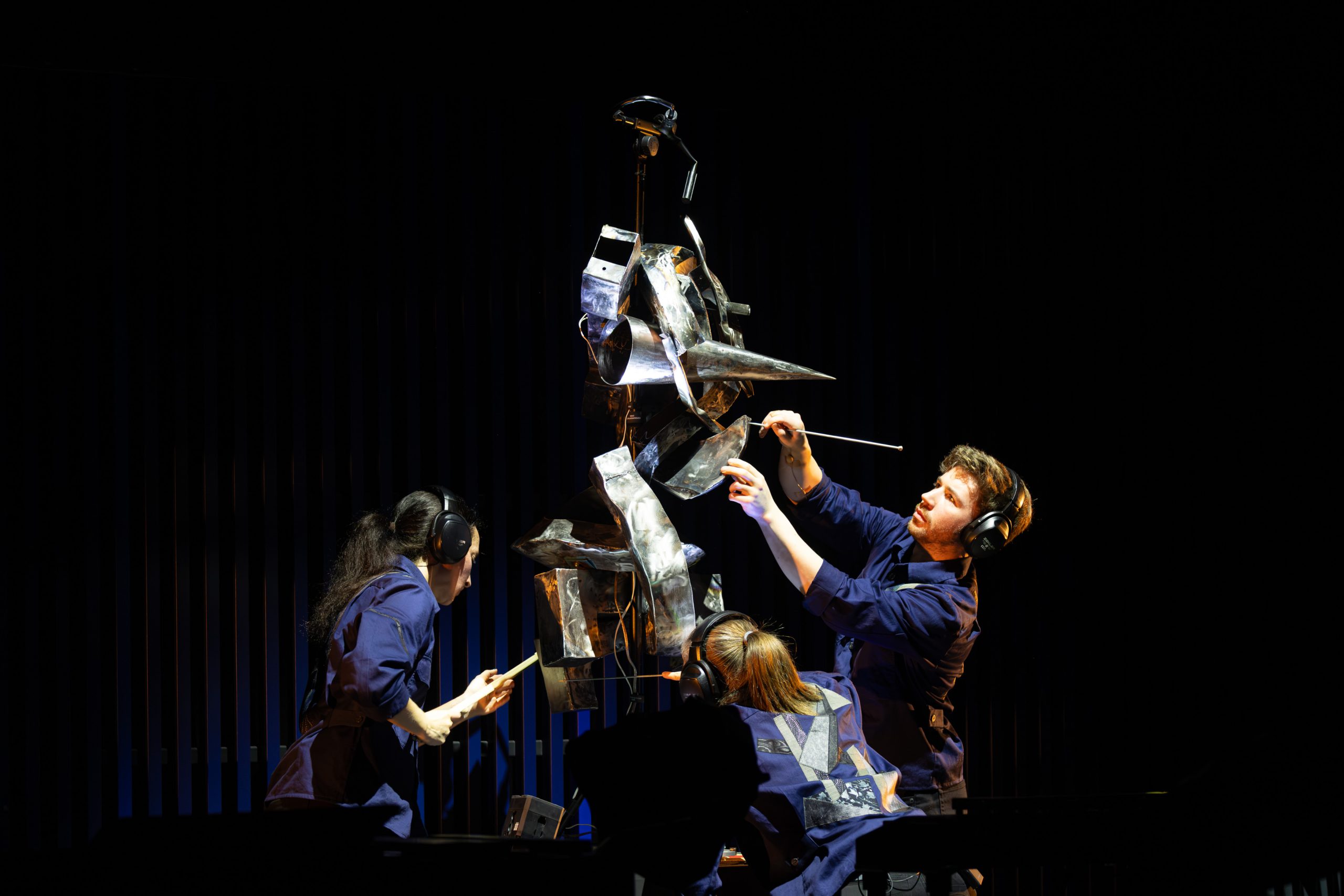
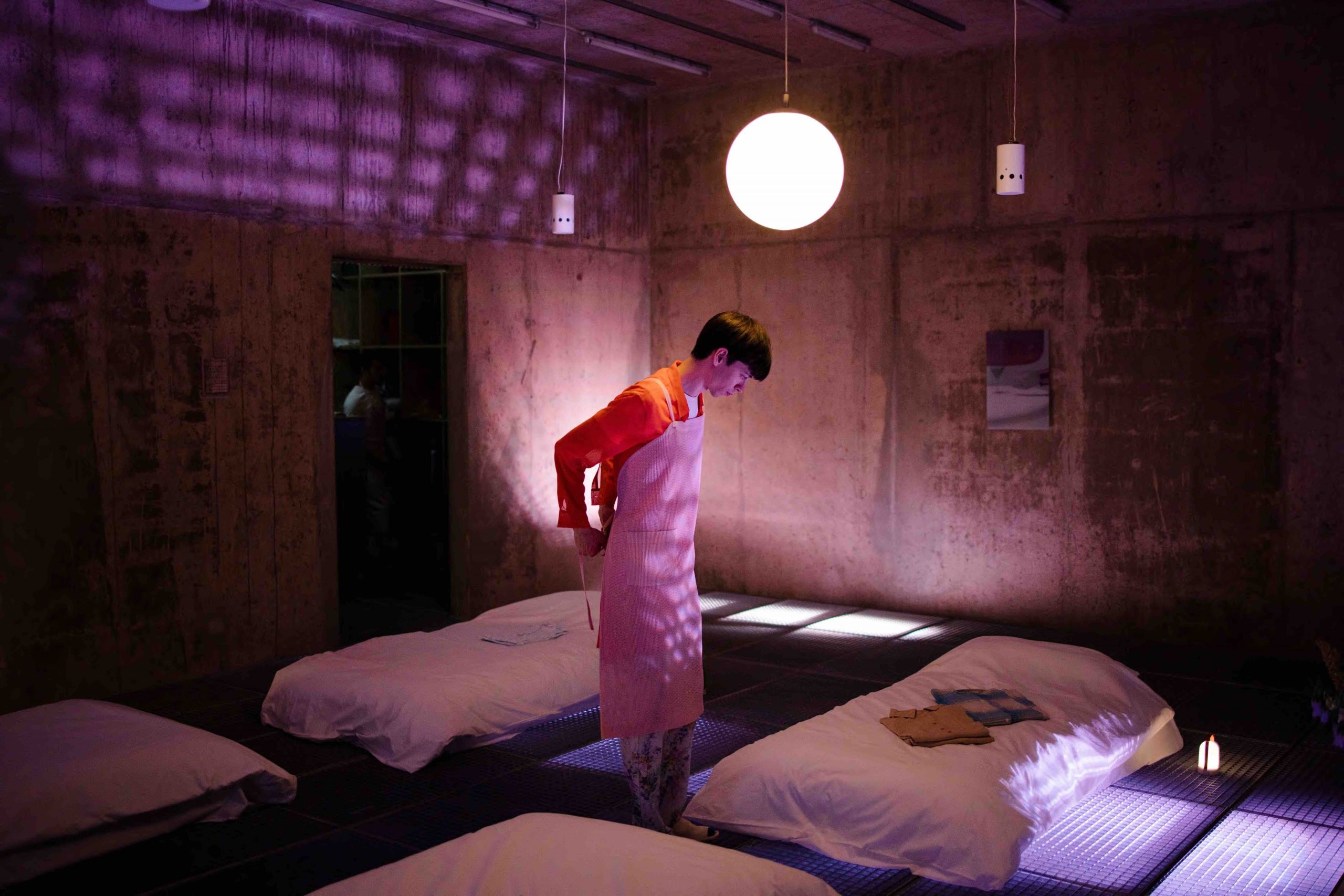
It is widely acknowledged that contemporary music is experiencing an increasing growth in material possibilities. However, the structural thinking required to meaningfully relate these material possibilities remains an open question for composing. Steven Takasugi’s Museum Factory, which is scored for a percussion trio, electronics, video, light and sculptures, offers a particularly compelling setting to explore this subject. In the context of this edition of the Donaueschingen Musiktage, which has Polyphony as its central theme, the relationship between these different materials and media is of particular significance.
The central compositional achievement of Museum Factory lies in what might be called an immanent transposition. Rather than merely adding new elements or placing them next to each other, the work operates with sound, gesture, light, and video to repeatedly expand and transform existing materials and relationships, thereby opening up new planes of operation and new possibilities of organization. In this sense, its compositional logic concerns not only the interaction of different materials, but actually the transformation of dimensionality itself.
The work unfolds through a remarkably disciplined, almost schematic movement. The three percussionists begin at separate stations arranged horizontally across the stage, initially establishing the principal focus of the work. As soon as they begin to play, our attention is drawn to the audiovisual relation. Sonically, we encounter highly scattered, choked, and pointillistic percussive sounds created through a combination of amplified acoustic instruments and prerecorded samples. This texture is punctuated by sounds with longer sustains and greater resonance, such as those produced by bells and metal instruments. Visually, we observe the performers‘ movements as they operate in their respective stations. At certain moments, however, the visual field is interrupted by theatrical gestures that exceed the movements required to play their instruments: slow changes in facial expressions, or sudden backward twists of the arm.
During this opening, Takasugi sustains our attention not only by inserting resonant sounds and theatrical movements at particular moments in time, but also by creating negative relations between the auditory and the visual domains themselves. Although we recognize the percussionists as the physical sources of the music, not all the sounds we hear correspond directly to their actions. This discrepancy produces a perceptual uncertainty: we are prompted to distinguish between sounds created by the performers onstage and those supplied by the electronics.
At the same time, the relations between the three percussionists gradually become more differentiated. Although their stations occupy one horizontal plane, their musical materials and movements unfold in a heterophonic fashion. The relationship between the musicians thus mirrors the relationship between sound and image structurally: in both cases, a high degree of similarity and overlap is interrupted by irregular differences and contradictions.
Interestingly, this structural isomorphism does not lead to monotony. On the contrary, the minuscule discrepancies between otherwise similar materials actually sustain our attention and prevent perception from settling into an undifferentiated whole. The work’s initial organization thus depends on a delicate balance between repetition and difference, continuity and interruption. Emerging out of this constellation is a perceptual field whose internal relationships become complexified gradually, continually inviting closer observation.
As the opening continues, the density of these small-scale events gradually becomes familiar. As a result, perception itself seems to zoom out, stabilizing the musical and theatrical texture gradually into homogeneity. This stabilization serves as the necessary condition that allows the introduction of a new perceptual layer. So far in the work, we have been aware of the black canvas positioned on the back wall. Now, small, scattered white points begin to appear on the screen in correspondence to the short percussive attacks. The visual and auditory domains acquire a further pointillistic parallelism: both consist of irregularly distributed events emerging against a relatively continuous background.
The music gradually develops into irregular collective flourishes, as isolated articulations gather into recognizable but still jagged phrases. The video also undergoes a comparable development, with brief flashes revealing shape-shifting forms that resemble the sculptures positioned behind the performers onstage. In both cases, the material becomes increasingly recognizable without losing its irregularity.
A structural moment occurs around the fifteen-minute mark, first signaled by a change in light-design. Whereas the light had previously focused on the individual performers and their stations, it now illuminates the back wall in three distinct, bright geometrical planes. At the same time, the performers begin striking smaller objects propped up on the side of their stations, initially sounding like tightly tuned roto-toms or metal piles. Their attacks are violent and irregular, sharply contrasting with the more delicate percussive events earlier.
This moment extends the pointillistic organization of the opening into a new register. The configuration of discrete points emerging against a continuous background remains, but the scale and intensity of the events are now magnified dramatically. The brief articulations that had previously appeared against silence are now enlarged into explosive attacks, while the jagged phrases of instrumental sounds are pushed into the background. The objects being struck are eventually recognizable as smaller sculptures, establishing another conceptual instance of structural isomorphism with the larger vertical sculptures in the background. Their timbral difference introduces the sculptures into the musical process for the first time, preparing for their more prominent role later in the work.
Another striking moment appears as the movements of the performers are suddenly interrupted by a horizontal shift to the left, after which they return to their original stations. This asymmetrical translation is accompanied by a horizontal sweep of the light-beams. Compositionally, this gesture extends the performers‘ movement beyond their designated stations, developing the subtle theatrical movements established earlier. This moment also marks a first significant structural moment for light-design, as its behavior moves beyond a means of illuminating the stage: its movement becomes an event in its own right, entering into a structural parallelism with the performers’ actions through the operation of a horizontal translation.
Although this shifting movement is sudden, its strangeness has been prepared by the more subtle theatrical gestures scattered throughout the opening. The horizontal movement also introduces a spatial motive that will become increasingly significant as the work progresses. More broadly, it raises the question of how a spatial relationship can become a compositional principle rather than remaining a mere feature of stage arrangement.
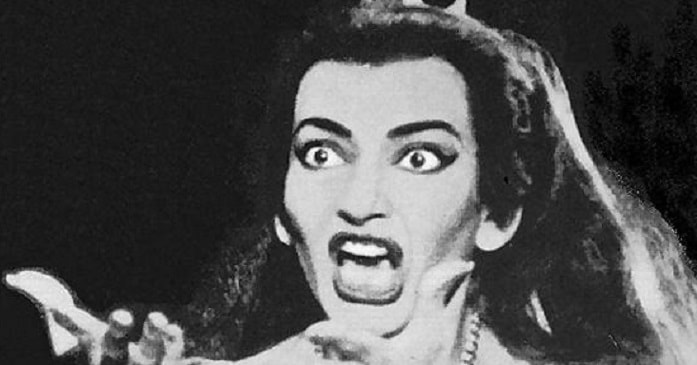
Around the twenty-one-minute mark, a duet occurs between one of the percussionists and the video. A focused cold beam isolates the performer at the center of the stage, where she stands before her percussion station. She suddenly begins rubbing her face violently, as if attempting to remove her own skin. Accompanied by a chaotic, noisy soundscape and rapidly shifting distorted faces in the video, the scene resembles a sequence from a horror film.
Normally, such imageries loaded with cultural associations would be cognized rather quickly in comparison to our processing of abstract musical content, and it has the tendency to increase the subsequent velocity of meaning-making. What makes this moment highly original is the modulation of these two different modes of semantization. The scene lasts approximately five minutes, during which the distorted face remains its central visual and gestural material. This means that despite the introduction of imagery with strong semantic associations, the informational density of the whole sequence remains relatively stable. This extended duration thus tempers the pace of semantization, allowing the scene to introduce highly legible visual material without collapsing the slower speed of musical meaning-making.
This clever compositional treatment brings together two drastically distinct interfaces and speeds of meaning-making through an operation in the treatment of temporality: an operation that allowed the two modes of semanticization to coexist without subsuming any one into the other.
The section concludes with another horizontal movement by the performers, accompanied by a corresponding horizontal shift of a geometric plane in the video. This gesture effectively rounds off the earlier asymmetrical translation. Its significance lies in the way it connects two different levels of formal organization. At the level of musical structure, the work has moved from the percussion-trio section to the face duet. At the level of physical movement, however, this concluding gesture continues the horizontal shift established before the duet began.
In this sense, this gesture creates a secondary arc that crosses the analytical boundary between the two musical sections. Rather than functioning merely as a repetition or variation, it establishes a relationship between those two distinct sections that becomes apparent only when their movements are considered together and retrospectively. This is another instance of the work’s nested structures: local differences distinguish individual sections, while recurring developing gestures connect them within a larger articulation. The horizontal movement both completes the earlier asymmetrical shift and links otherwise distinct musical sections.
Around the twenty-eight-minute mark, another percussionist moves to the center of the stage and becomes illuminated, thereby setting off a second duet. This time, the percussionist plays with the movements of the mouth and cheeks, while the video focuses on the corresponding facial features. In contrast to the previous duet, where the face functioned almost as an isolated image against a relatively continuous soundscape, the sounds and images of the mouth-play are more pointillistic, yet at the same time more resonant. The sounds and images overlap more frequently with the performer’s sharp finger attacks on the face, making the electronic sounds and visual changes appear more directly connected to the performer’s action.
This duet soon expands as the other two percussionists rejoin the musical texture. While the central performer continues the mouth-play, the others resume playing their instruments. Several materials that had previously appeared separately are now brought together: the sharp, fragmented instrumental samples are now layered with the rounder sounds associated with the mouth, bridging the choked and the resonant. Instrumental playing and theatrical gestures are thus no longer merely juxtaposed, but brought closer, merging together within the larger texture.
Following this passage of high intensity, the activity gradually subsides, yet the performers’ physical gestures expand across the horizontal axis. At approximately 36:30, all three percussionists hold two bows and extend their arms horizontally, slowly bowing across the sculptures positioned beside them. Their bodies are now fully extended along the horizontal axis, and the gesture establishes a moment of striking symmetry: all three performers use the same instruments and move in complete correspondence, while faint parallel lines appear in the video behind them.
In the following section around the forty-minute mark, the face motive returns, now in a form that further develops the parallelism between the performers. Each holding a metal window in front of their face, they open and close it forcefully to reveal changing facial distortions. The movement produces a crisp, metallic sound reminiscent of the earlier strikes on the sculptures. Initially facing the audience, the performers occasionally turn slightly to the left or right, subtly exploring the horizontal space around them.
This horizontal expansion leads to one of the work’s most extraordinary moments. As the opening and closing of the metal windows gradually accelerate, the auditory and visual activity intensifies simultaneously. Sonically, the discrete metallic attacks undergo a perceptible transformation: as the movement becomes faster, we recognize a literal transformation from discrete acoustic percussive metallic points to an upward glissando in pitch taken over seamlessly by the electronics. The increasing speed of physical gestures thus produces a transition from discrete rhythmic events to continuous pitch movement.
This moment brings the work’s compositional principle into particularly clear focus. So far in the work, the expansion and nesting of different materials have created increasingly complex relationships between them. Yet these relationships have largely remained parallel: distinct elements coexist, overlap, and reflect one another, yet these operations had always been treated as givens. To put it in another way: despite the nested elements being recognized in their parallelism to, and in their difference from, each other, they do not yet in a true sense converge, nor do they realize a new dimension through the establishment of a new operation: their existence and their parallelism are merely posited, or positioned, in what happens to be a parallel configuration, but the movement from the one to the other, or their true relation, remains missing.
But at this specific moment, through the operation of this simultaneous crescendo and accelerando, we witnessed a literal and complete transformation bridging the distance between rhythm and pitch, acoustic and electronic, noises and tones, through which one domain is generated immanently out of the other as the result of a continuous process. The relationship between different domains thus becomes clarified as a movement—one develops into the other.
In this sense, the passage offers the clearest realization of the immanent transposition that underlies the work. A new mode of operation emerges from this internal transformation of the material: immediately following it, a highly semantically and structurally complex moment occurs: in memoriam Peter Ablinger. The electronics present a clearly recognizable reference to Ablinger’s speaking piano, while the three performers move toward the central sculpture and strike it with extreme speed and intensity.
The logical coherence and clarity of this moment must be emphasized: through the previous operation, we now access a new dimension among the domains of sounds, visuals, and semantics. Firstly, through the continuous movement from rhythm to pitch, we have traveled through the entire spectrum of frequencies, metaphorically making available all possible pitches and noises. This induces Ablinger’s speaking piano—a literal convergence of rationalized pitches and the pure sound of language. The semantic plane also experiences a moment of convergence: the speaking piano seems to respond to the speechless faces and mouths that had been distorted and violently interrogated countlessly in the work thus far. Yet, in the Ablinger, the piano dictates in the abstraction of an incorporeal singular dimension, while here in Takasugi, the body seeks its vengeance: the intensely physical, dense, and violent actions on the sculpture produce an abrasive and brutal sound that resembles the shrill of human screams.
Completing the one-dimensional abstraction of Ablinger is also the immanent generation of a new geometrical plane of operation in the physical space. The horizontal dimension, which has structured the performers’ arrangement and movements throughout the piece thus far, now encounters a more emphatic vertical axis: it is thus no surprise that the only vertically positioned objects onstage—the large sculptures silently erected behind the performers—become now the central focus. The central sculpture rises above the performers, who distribute themselves along its height in order to strike different parts of its surface simultaneously. While these sculptures in the back are the only objects positioned vertically on stage, the performer’s vertical arrangement here is equally physically necessitated by the dimensions of these objects, while also being a prominent logical and compositional consequence.
Importantly, the work does not simply transpose itself to the vertical and abandon the horizontal. As the passage develops, two of the performers move away from the central sculpture toward the sculptures on either side. The configuration thus undergoes a further horizontal expansion: all three performers strike their respective sculptures with increasing intensity, combining the vertical organization of the central scene with a renewed horizontal spread across the stage.
This chaotic intensity continues for nearly ten minutes. The video fills with rapidly shifting faces, while the lighting grows more intense through strobes and sweeping beams. Yet the work does not conclude at the height of this activity. Instead, the final attack gives way to what sounds like a dark resonance, creating a reflective distance from the preceding violence and subtly avoiding the cliché of a grand finale.
Taken as a whole, Museum Factory offers a compelling demonstration of structural thinking. Its use of structural isomorphism does not simply produce iterations of pre-established relationships; it creates conditions for further differentiation and compositional development. The work’s form is correspondingly complex on both the macro and the micro level, shaped not only by its long-term trajectory, but also by the placement, recurrence, and temporal treatment of more local structures. Although musical and theatrical actions are closely integrated from the outset, their relationship is not fixed; it develops through successive expansions and transformations, converging into the final climax. The work also explores how different modes of semanticization can coexist through the modulation of their inherent temporality, thus bridging the abstract difference between different modalities of meaning-making and cognitions.
In this way, the work seemed to reveal a very specific musical logic—the immanent generation of dimensionality and orders of operation—which carries in itself the pre-condition of polyphony, and is realized in the musical-theatrical domain. This also raises a further question: do the video and light-design stand in a productive relation to this musical logic?
The video contains several moments of clear material and structural coherence with the musical-theatrical elements: the scattered white points in the beginning, the diagonal shifts across the screen, the distortions of faces and mouths, and the parallel lines that underlie the extended horizontal gestures. Nevertheless, the increasing concreteness of many of the video’s displayed contents also creates a tension with the more abstract organization of the musical-theatrical material. The faces and mouths are particularly effective during the two duet scenes, where they establish a clear relationship with the performer’s gestures. Later, however, shifting faces and sculptures often seem to function primarily as a means of increasing visual intensity. In such passages, the structural necessity of the video’s activity and content is less apparent than that of the musical-theatrical events, and the imagery consequently risks becoming ornamental.
The issue here is not that the video should necessarily subordinate to the aforementioned musical-logic, or that visual concreteness is inherently incompatible with abstraction. Rather, the question is whether the accumulation of visual intensity enters into a productive relationship with the transformations taking place elsewhere in the work.
The lighting, by contrast, is generally handled with considerable subtlety and effectiveness. The balance between illuminating the performers‘ actions and allowing light to function as an independent compositional element is difficult to establish, and many of the lighting changes do contribute meaningfully to the work’s spatial organization. Nevertheless, one is left wondering whether certain lighting effects and behaviors might have been generated through a more direct engagement with the physical and musical processes taking place onstage.
The use of strobes is a particularly revealing example. Stroboscopic lighting appears during the mouth-play section and again at the work’s climactic passage. In both instances, it coincides with a high level of intensity and density in the musical-theatrical domain. This raises the question of whether the strobe functions as a compositional element in its own right or primarily as a means of amplifying an already intense scene.
As a speculative compositional exercise, one might imagine a different way of introducing the effect. During the passage in which the performers open and close the metal windows with increasing speed, their movements become progressively less stable. The windows begin to shake, and the changing angles between their reflective surfaces and the stage lighting produce irregular flashes of reflected light. As the movement accelerates, these flashes increase in frequency and density, generating an analog stroboscopic effect from the physical action itself. Such a process could have been taken up as a compositional moment, as it establishes a direct relationship between the musical-theatrical transformation and the lighting. It might also have retrospectively connected the earlier use of strobes to a structural process that becomes fully apparent only later in the work.
This is, of course, only one possible approach. The value of a collaborative work lies partly in the coexistence of different artistic voices and approaches; Takasugi did not design the sculptures or compose the video and light scores. Nor is ornamentation inherently problematic. Nevertheless, given the degree of structural integration achieved in the musical-theatrical domain, the video and light-design sometimes leave one wondering whether their distinct approaches could enter into a more consequential relationship with the work’s underlying compositional logic.
Another observation concerns the sound diffusion. From behind the mixing desk, much of the work appears to be panned strongly to the left and right. This extreme panning further underscores the structural significance of horizontal configurations and operations. At the same time, the degree of improvisational freedom in the panning, as well as the spatial placement of events at the climactic point, seemed to leave room for further level of structural integration, through which the expansion of spatial dimensionality and the relationship between the auditory and visual domains might have been further developed, depending on the interpretation of the Klangregisseur.
It is important to emphasize that these observations are based on a single visit to the dress rehearsal of the work. A single encounter cannot possibly capture every detail of a work of this complexity and sophistication, and further encounters may reveal further relationships. Even so, Museum Factory reveals a striking sense of internal coherence. Although Takasugi described his compositional process as largely intuitive, the work seems to suggest that the necessity of a musical logic can indeed emerge through the material and its organization, to the point of exceeding a simple opposition between intuition and planning. To witness and trace these immanent transformations is to encounter a form of musical thinking that is at once materially grounded and irreducible to the structures through which it becomes intelligible.
by Ziyi Tao