Donaueschinger Musiktage 2026: Peter Tracy on Eliane Radigue and Marina Rosenfeld
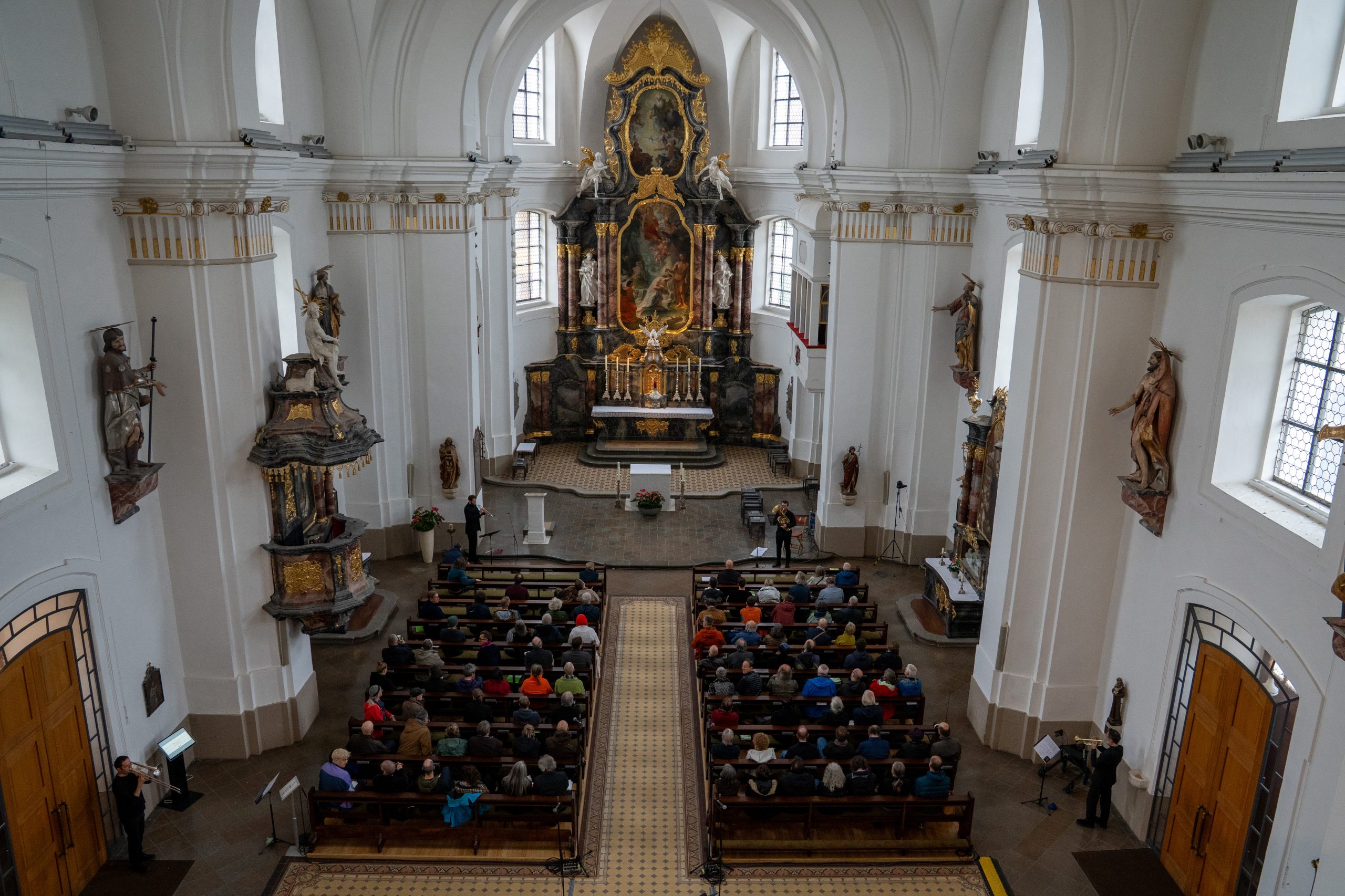
Considered even with its cultural and religious associations to one side, a reverberant church like Donaueschingen’s Stadtkirche St. Johann may well provide the optimal context in which to experience a piece like Éliane Radigue’s OCCAM XXV zêta (2018/2026). And even aside from the spiritual consolations it offers, Radigue’s work can be considered as avoiding or providing solutions to many of the problems confronting composers today: questions surrounding the relationship between ‘extra-musical’ concept and sonic experience, ornament vs essence, active vs passive listening, formal cohesion, and the applicability of traditional musical gestures or techniques to contemporary practice, to name a few. Given the well-deserved revival of interest in Radigue’s work, the real star of this concert was however Marina Rosenfeld’s XY, an unexpected highlight of the festival which seems to draw on Radigue’s use of brass and organ while successfully integrating a broader timbral and gestural vocabulary into a more differentiated form.
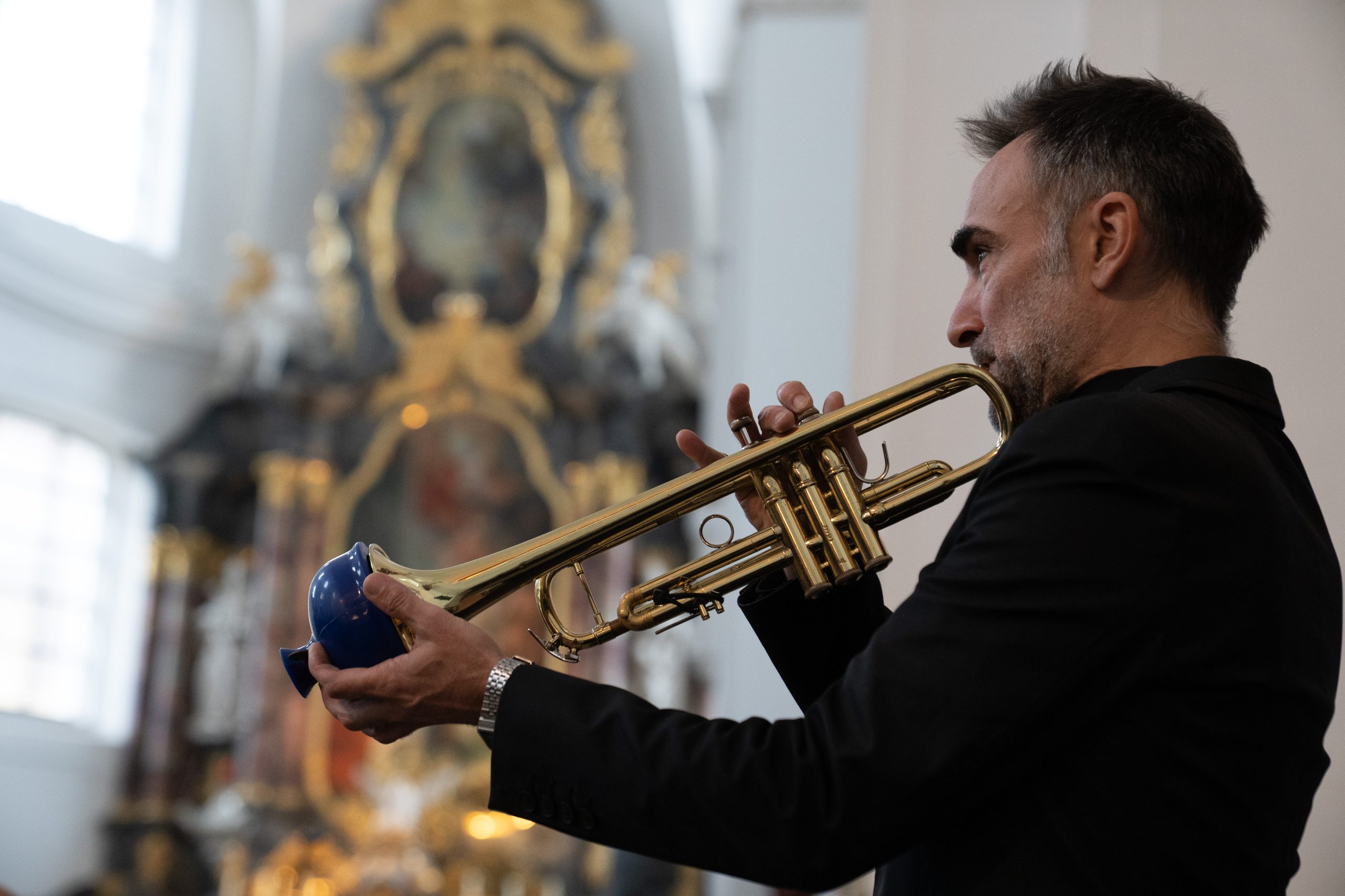
The similarities with Radigue’s minimalism are clear: in both pieces, relatively simple layers of musical material are stacked on top of one another, resulting in a clarity of process that comes together in a surprisingly complex and subtly shifting musical texture. Rosenfeld’s materials nevertheless expand beyond Radigue’s insistence on drone and interference tones to include antiphonal trumpet glissandi, tight clusters of organ harmonies, raucous brass trills, and even percussion in the form of woodblocks and brushes. What helps maintain XY’s sense of clarity and simplicity is its three-part formal structure, with each section punctuated by silence. And although the first and second sections follow rather predictable arcs of tension and release, the third section’s relative stasis and strong, abrupt ending round out the form and attest to Rosenfeld’s careful sense of pacing. Each of XY’s three sections is sonically distinct, yet the return of certain layers and characters from previous sections save any gesture from feeling merely arbitrary: trumpet solos help to open both the first and the third sections, the insistent woodblock pulses which open the second section return briefly in the third, and the brass’s powerful, spatially-explorative call and response serves as the dramatic highpoint of both the first and the second sections. It is the sense of inevitability which this tight integration and clarity of form provide that might help to explain why XY also seems to gesture towards the spiritual, the eternal, and the unknown.
There are nevertheless no explicitly programmatic elements to XY, no concept through which we might serve to answer the question: what’s it all about? Taking the composer at her word, one might point to her program notes for the piece, which quote those for her previous contribution to Donaueschingen, the 2023 installation work The Agonists. In this work, she claims, “considerations of scale, of likeness, and of material difference and affiliation could be said to stand in for problems of instrumentation, the use and arrangement of bodies, histories of practice and even affiliation to various (historical) formal languages.” In both works, she continues, a “recursive jumble of visual and aural signifiers” jostle “in a perceptual field ‘like distracted or argumentative guests caught in a grammatical or libidinal matrix.’”[1] More concretely, this could be interpreted as an insistence on polyphony (the theme of this year’s festival) as a means through which to mirror the complex and ever-shifting web of signifiers through which we attempt to understand the world. To the extent that a set of distinct musical voices, each with their own gestural and sonic vocabulary, are in fact satisfyingly integrated into a polyphonic whole in XY, the piece could be said to succeed in its goals.
That this is a rather abstract and ambiguous goal is in no way to the piece’s detriment, and is in fact one of its greatest strengths. In contrast to many of the other pieces presented at this year’s Donaueschinger Musiktage, XY insists on sound as one medium among many through which we can describe, mirror, and understand the world without feeling the need to fix any meaning thus created to a pre-conceived, ‘extra-musical’ message. It equally insists on the fluidity and obscurity of the concepts and signifiers through which we understand the world. In the words of philosopher Raymond Geuss, one of the central problems facing artists is the tension between obscurity and clarity: “as long as the work remains obscure,” he claims, “it has not yet acted effectively, but when, and if, it stops being obscure, it loses its most important purpose, its real point.”[2] Like OCCAM XXV zêta, XY provides its own provisional solution to this problem, a solution which rests on explicitly musical forms of meaning-making and which makes no claim to being final.
by Peter Tracy
[1] Rosenfeld, Marina. „Marina Rosenfeld: XY.“ In Donaueschinger Musiktage, edited by Florian Heurich, Lydia Rilling, and Hans Fahr.: Südwestrundfunk (SWR), 2026.
[2] Geuss, Raymond. „Vix intellegitur.“ In A World Without Why.: Princeton University Press, 2014. p. 43.