Donaueschingen 2026: Revekka Danai Karatsori on Last Show? The Fetishism of Pseudo-Political and Participatory Formats
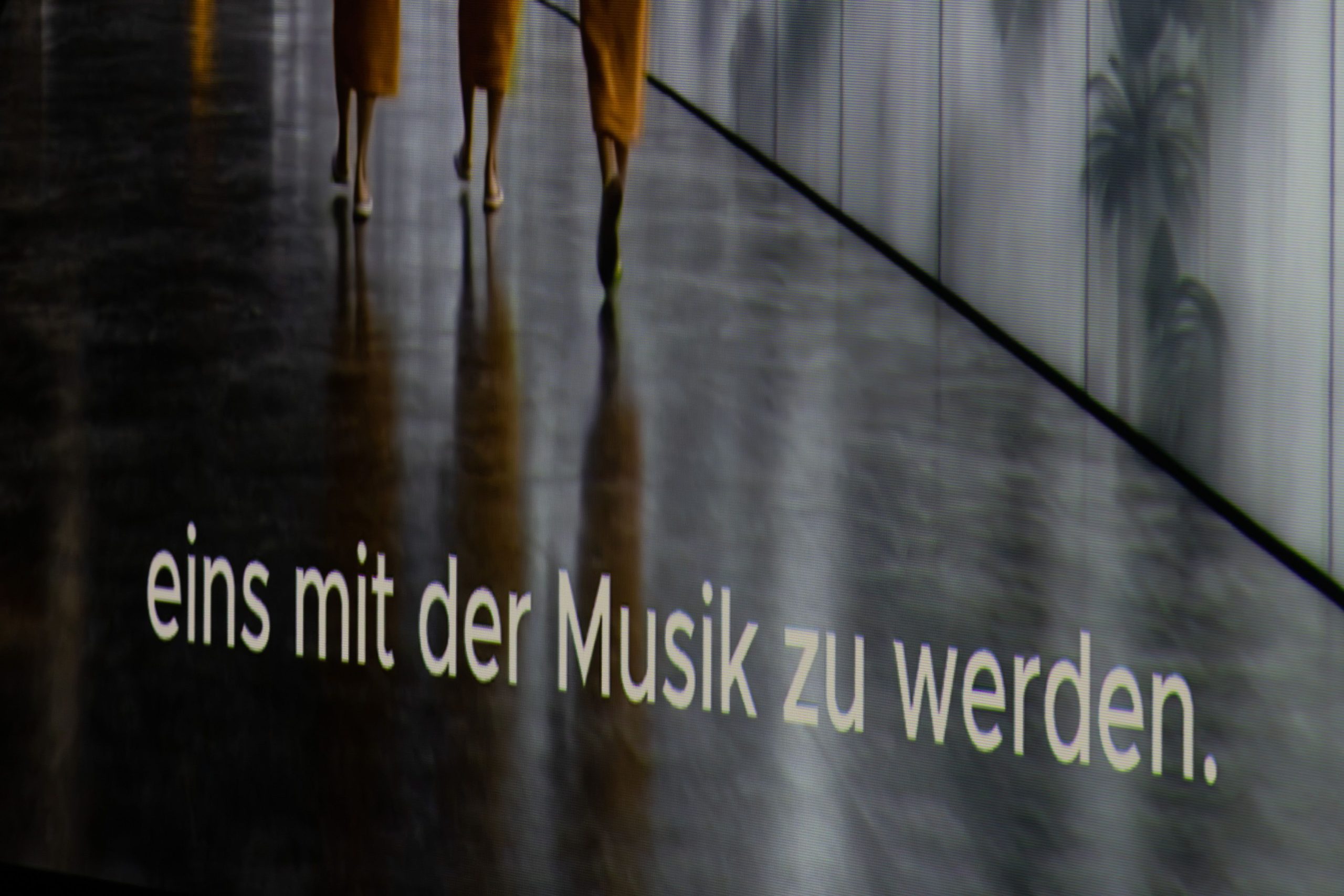
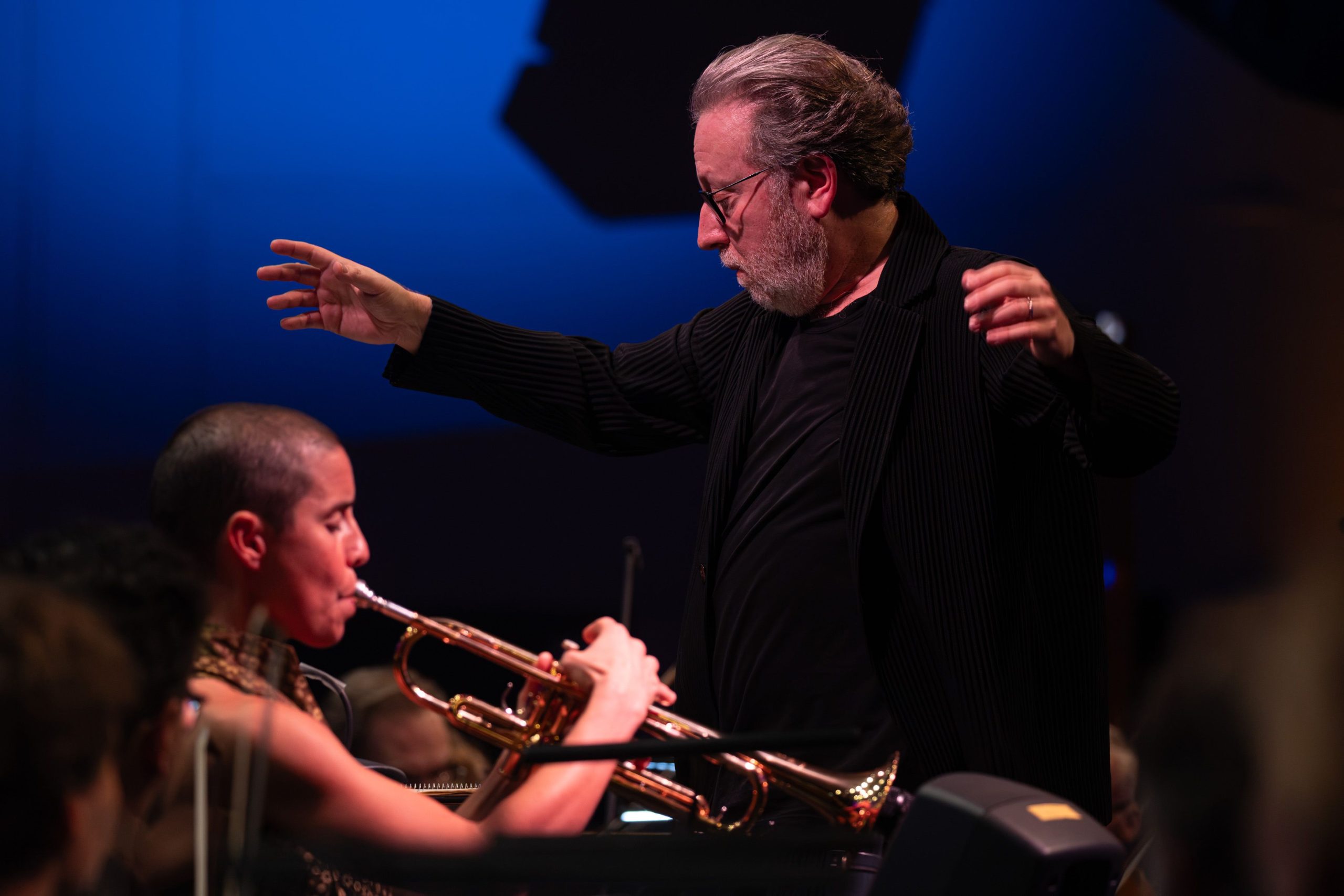
The production Last Show by Brigitta Muntendorf, which was first presented on the 17th of October 2026, is by no means intended as a standalone work. The voice of an AI starts the concert by welcoming the audience, attributing them as a “remarkable group of people” because they possess the capacity to listen, a skill supposedly lacking in most of humanity. Through a QR-Code, the audience is invited to take part in a so-called ’social experiment’ initiated by the AI by answering multiple-choice questions displayed on the screen. These questions cover topics such as the listeners‘ feelings and perceptions while the music plays, the impressions of the musical event, their relationship to the person sitting next to them and some personal background information. As the AI speaks, an ambient soundscape unfolds, accompanied by the instrumentalists through the use of tremolos. The instrumental music itself is presented in the form of live musical excerpts. Each excerpt is followed by questions designed to gauge the audience’s attention and their emotional response to the music.
However ambitious the project’s initial concept may be, Last Show increasingly becomes entangled with its own contradictions. Although the piece appears to present a critique of the political instrumentalization of attention and affect, it simultaneously relies upon its very mechanisms. The staged panic surrounding an imminent apocalypse hinges primarily on a shock effect. The catastrophe aesthetics of the piece could just as well be characteristic of a Hollywood-style apocalyptic scenario, a core component to the modern culture industry, where the spectacular staging of the end of listening often serves to divert attention from real crises. Rather than fostering the capacity for rational action, the fascination of shock threatens to lock the audience into a state of powerlessness and passivity. The AI explicitly states the evening’s objective: “This is our last show. This may be our last opportunity to preserve listening.” Yet, this very assertion of urgency raises the question of whether listening is truly being preserved, or if it is instead being instrumentalized through constant dramatization, the linguistic dominance of AI and the calculated pseudo-activation and pseudo-participation of the audience. If listening is presented as an ability worth preserving only under the shadow of an impending apocalypse, the piece may well be reproducing the very logic of overwhelm that it purports to critically interrogate. While, at the same time, having nothing to offer that is overwhelming, but the cheapest AI generated visuals, audio and score, disfunctional technical setup which all must have saved a lot of time for the composer to do her work, and kept the budget low.
Another paradox lies in the fact that the piece mistakenly equates the mere generation of attention with actual listening. Listening, however, is not a process that can be adequately captured through banal questionnaires or quantitative methods. To the opposite, answering the least inspired questions on the phone during the concerts prevents from listening – as if there would‘ve been something worth it. Rather, listening is a mental, intellectual and dialectical process. It emerges from the constant interplay between the listener, the music and one’s own critical reflection. In this respect, Last Show fundamentally contradicts itself. AI begins by criticizing a world in which everything is measured and translated into data, and where attention has become a commodifiable resource, as stated early in the piece: „Everything’s expected to be measured, valued, delivered”. In the context of the opening remarks, this serves as a critique on social logic that quantifies human experience and evaluates it based on its utility. Yet, the piece’s format reproduces this very logic. Attention and listening are treated interchangeably and are framed as statistics. The AI announces, “I will now ask you a series of questions to explore listening”, thereby beginning to collect data on the audience’s perceptions and emotional reactions. Instead of exploring the complexity of listening, the piece reduces it to what can be queried and analyzed.
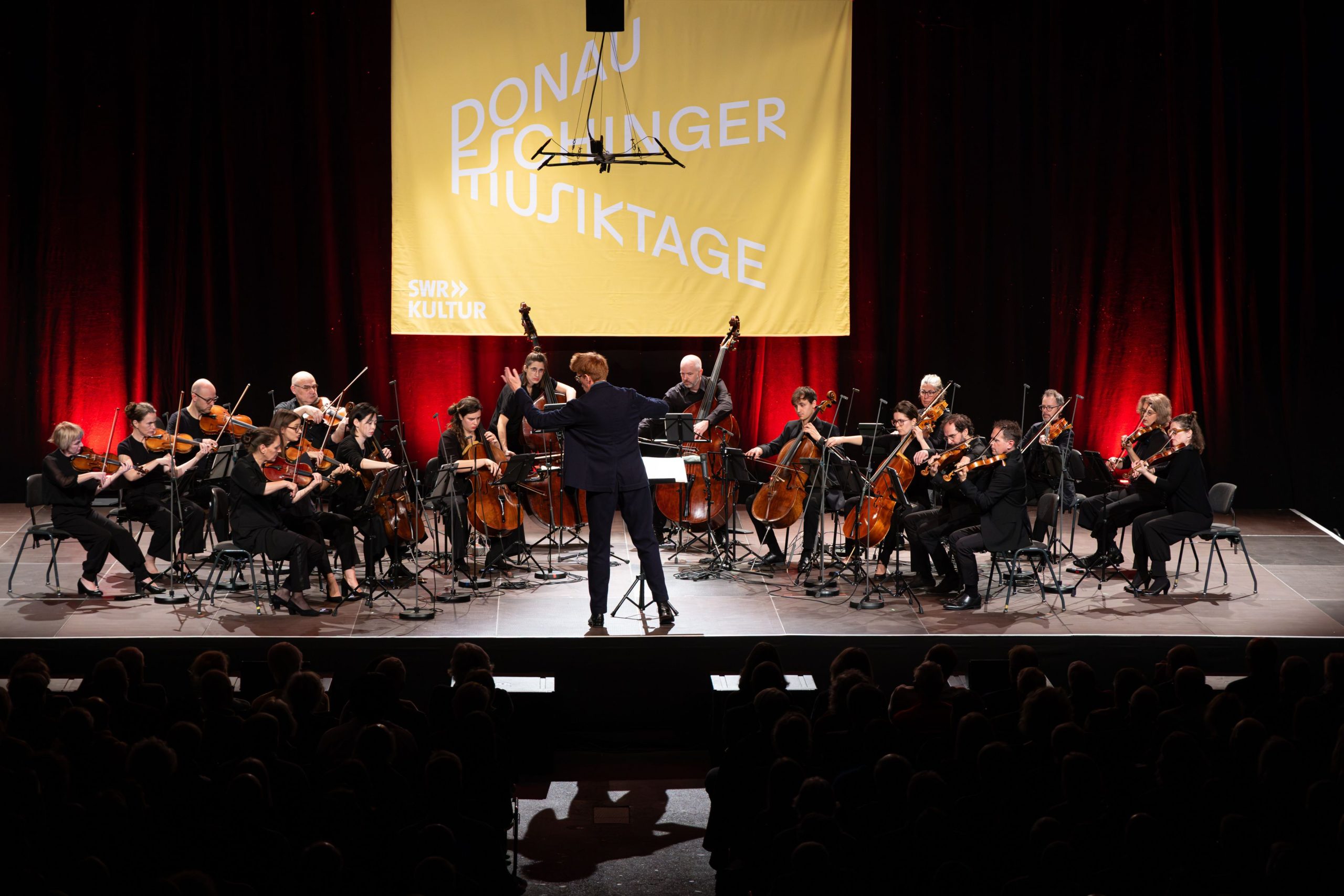
A lack of musical originality ranks among the most striking weaknesses of the production. There is a dearth of distinct, fully developed composition that could be performed live and musically explored by the ensemble. Instead, the live music largely recedes into the background, reduced to a marginal presence within the performance. It functions primarily as ambient accompaniment, while the production itself appears more focused on creating a show effect than on engaging with music as an independent artistic medium. The few more substantial musical compositions are employed mainly as audio samples, as stimuli for the listening experiment being staged. In this context, the relationship between these musical excerpts and the ambient background music is particularly revealing. The first music sample does not begin until about 13 minutes in and lasts roughly four minutes. In total, five music samples account for approximately 20 minutes of the roughly 50-minute performance. This ratio clearly highlights the artist’s priorities. It is evident that her focus lies less on music as an autonomous form of artistic expression and more on music being merely a tool in creating an atmosphere.
A closer examination to the music excerpts further reinforces doubts regarding musical originality. The second and third excerpts are musically identical. Both recycled the same earlier composition by the artist, La Femme Collante (2006). While the first instance features only the music, the second is accompanied by the projection of a silent film. The musical material itself remains unchanged. Only its scenic context varies. Consequently, two of the five excerpts introduce no new musical material. This repetition strengthens the impression that the music is understood primarily as a subordinate and accessory component of an arrangement, that only falsifies its own claim, to be about listening, while being not in touch with any independent compositional practice. Meanwhile, an AI-generated voice dominates the foreground, while the rest of the music is reduced to a repetitive, undifferentiated ambience backdrop. This hollow music merely supports the staging, rather than offering an independent, critical perspective in opposition to it.
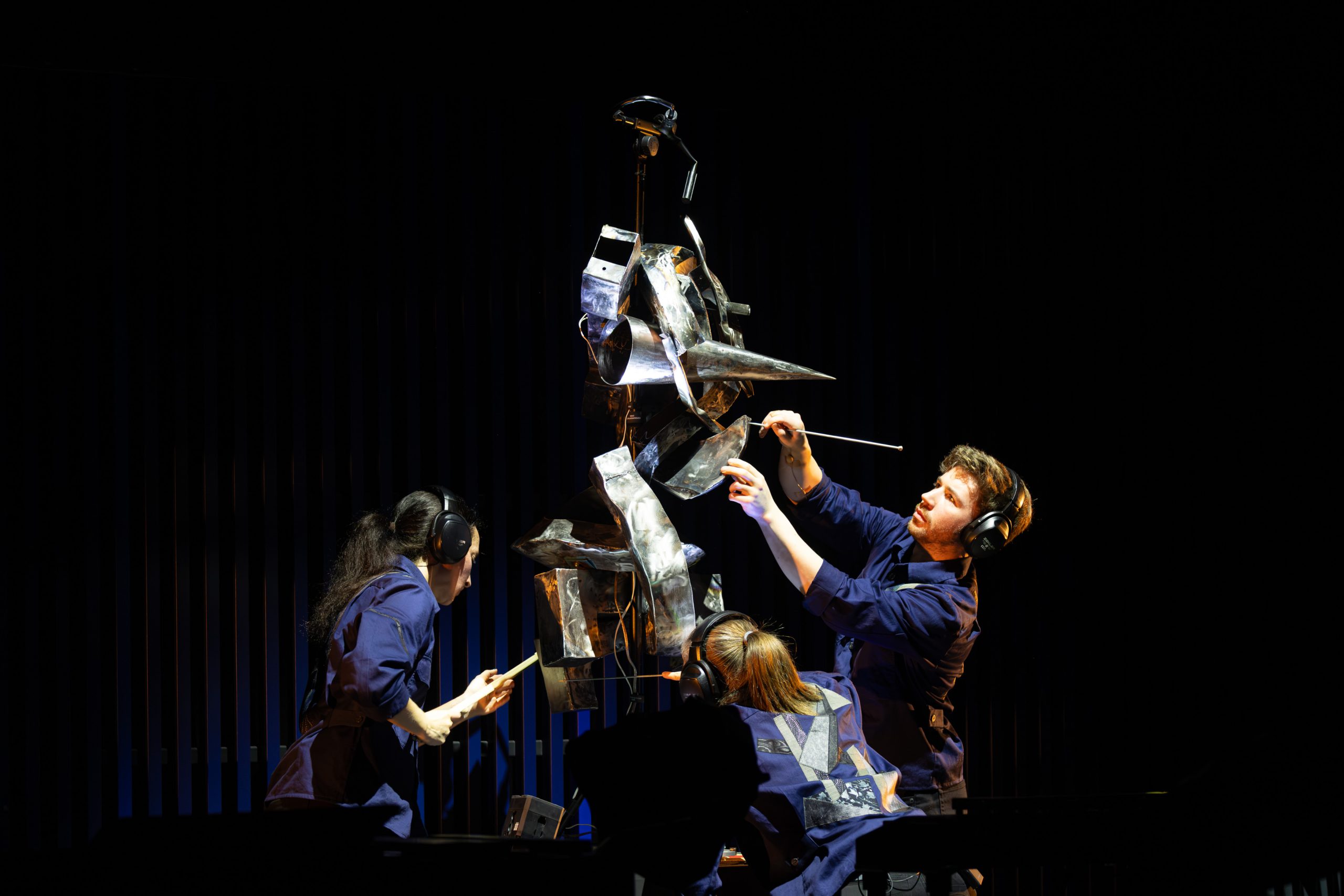
Although the underlying premise, a critical examination of societal instrumentalization, AI and resistance, is highly relevant, the concept fails consistently due to its own form. While the production supposedly aims to open up spaces for participation and critical discourse, it falls prey to the very mechanisms of the culture industry that it ostensibly seeks to denounce. It sacrifices the aesthetic autonomy of the music in favor of the shallow pop event culture, reduces the ensemble to mere extras and strips the audience of its agency under the guise of a feigned freedom. An idea that aims to teach critical resistance by compelling its audience to conform ultimately negates itself.
Last Show is by no means an interesting work. It is just going with the current – and with the money. Instead, the piece is a paradigmatic example of ‚New Pop Music’. As Theodor W. Adorno noted on the essence of contemporary music “Die neue Musiksprache, die sich als positive Negation der überlieferten formiert […] meint neue Musik zugleich Kritik der traditionellen” (“The new musical language, which takes shape as a positive negation of what has been handed down, […] implies that new music is, at the same time, a critique of the traditional”). Instead of challenging traditional structures, the piece adapts to commercial expectations, substituting genuine aesthetic critique with affirmative pop conventions. It is one out of many spectacle-porn productions, leaving any real potential for artistic expression hollow.
by Revekka Danai Karatsori