Donaueschingen 2026: Dora Sieber on Tomorrow’s Next Bliss by Igor C Silva
What happens when centuries of instrumental tradition meet the seemingly limitless sonic possibilities of electronic technology? The answer, I believe, should go beyond a mere juxtaposition of acoustic and electronic sounds. Rather, electronics should be embraced as an independent and transformative musical force in its own right, capable of reshaping our understanding of what sound and instrumental expression can be.
Two performances at this year’s festival left me reflecting on precisely this potential, although, in very different ways. While Natasha Barrett’s work left me wishing for a more profound exploration of electronic sound, Igor C. Silva’s piece demonstrated how acoustic instruments and live electronics can enter into a genuinely dynamic dialogue, opening new sonic possibilities in the process.
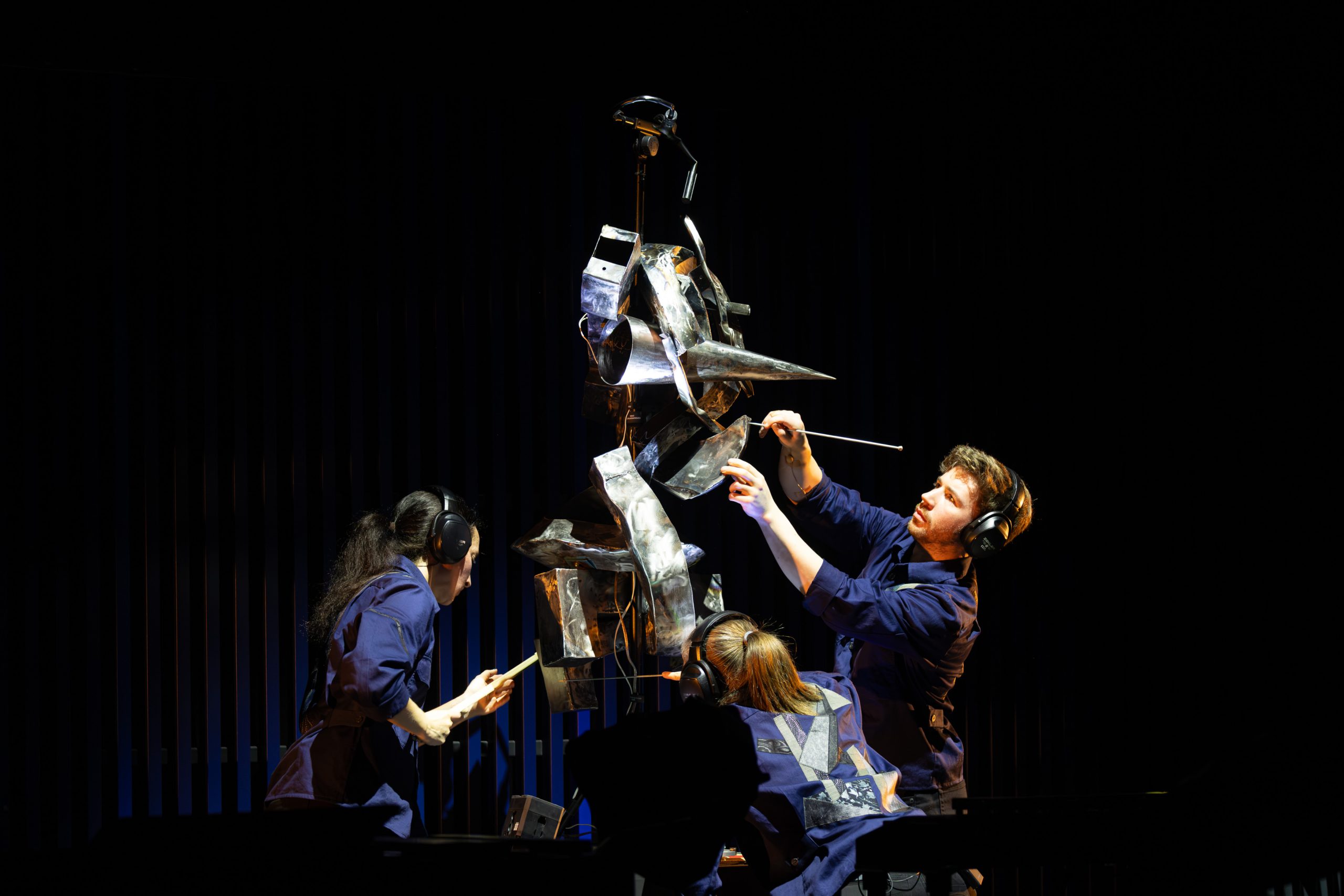
Let me begin with the piece The Disenchanted Tranquillity of the Kingdom by Natasha Barrett. I was initially intrigued by her idea of constructing an entire kingdom as a soundscape composed of a multitude of different sonic elements. The concept itself struck me as fascinating and full of promise. Technically, the piece was certainly convincing. Yet I found its narrative predictable, perhaps even too familiar to realise its full potential. The individual elements, such as the flute and trumpet, did not always seem to receive the attention they might have deserved, and I found myself waiting for moments that would challenge my expectations, surprise or open a new sonic perspective. Apart from some intriguing glissandi and delicate breath-based gestures in the flute, I felt that the piece did not quite fulfil the promise of its initial idea. The voice struck me as overly laden with pathos, and I found that the electronic backing tracks were too subtle.
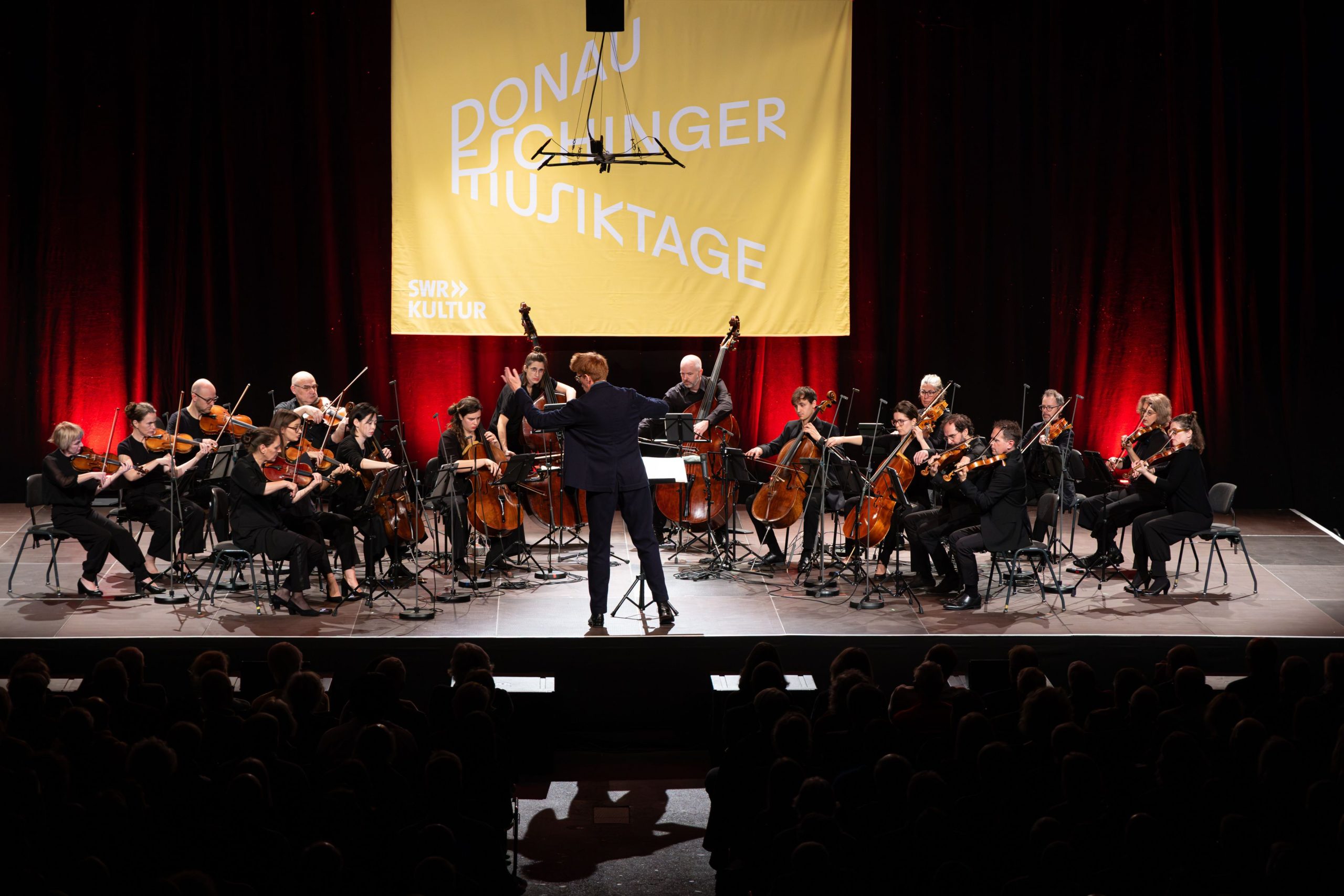
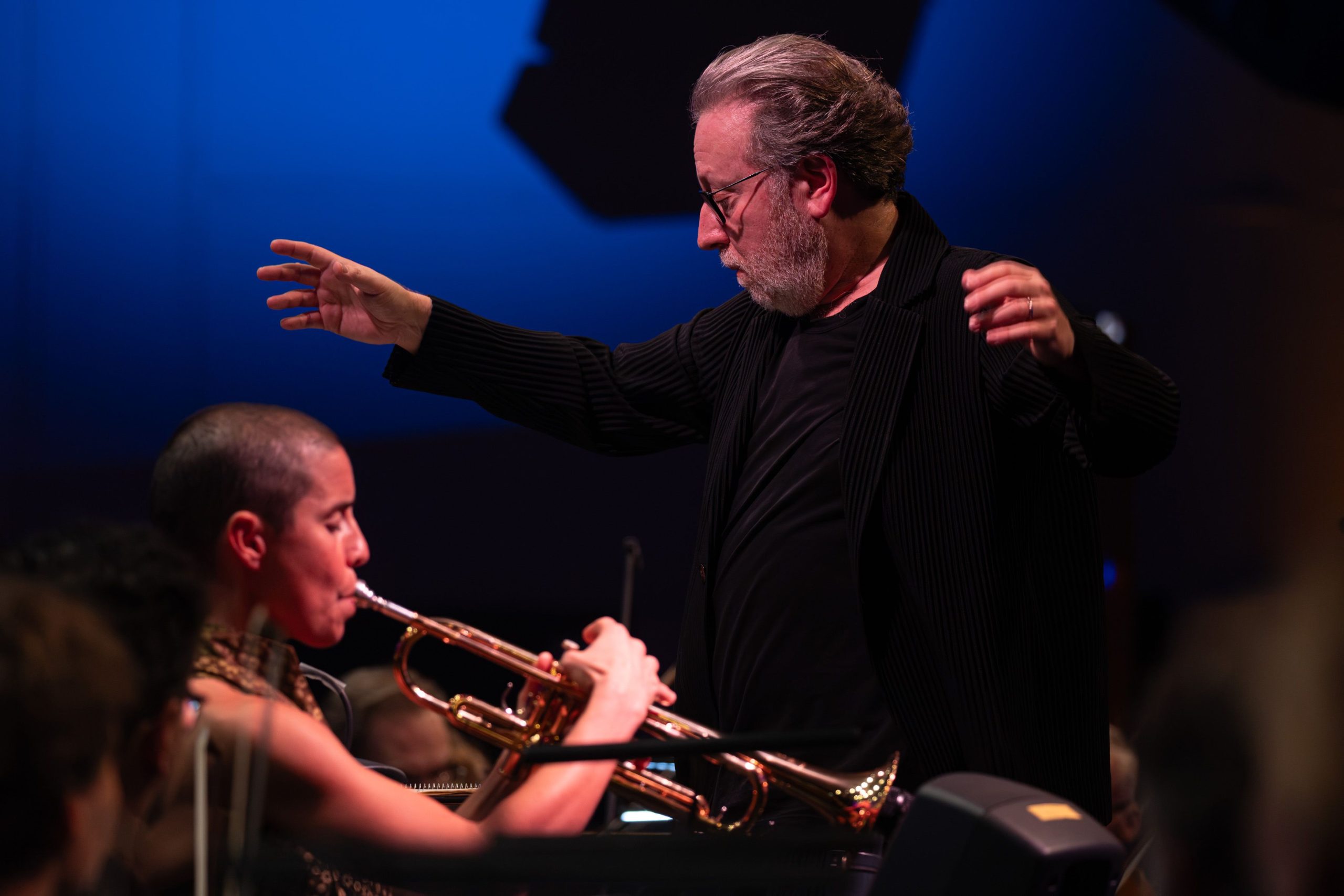
So, rather than dwell on a piece that ultimately left me unconvinced, I would like to focus on the work that preceded it: Tomorrow’s Next Bliss by Igor C. Silva, which I found considerably more compelling. Silva composed an improvisatory piece for trumpet, electronics and orchestra, involving three distinct yet interdependent musical agents: the trumpet soloist, the conductor, and Silva himself, performing with what was described in the introduction as the electronics. Personally, I would prefer to call it a MIDI controller, mapped with Ableton Max for Live device — for the sake of bringing precision into the wide range of the term electronic and because I think the instrument’s physical presence and Silva’s interaction with it were essential to what made this piece so effective. In fact, the entire piece seemed to emerge from the possibilities of Silva’s Max for Live patch. It was as though the electronic sound opened a space into which the trumpet could gradually enter, explore, and respond.
Three aspects of this performance particularly resonated with me.
First, the physical presence of the electronics on stage.
What I appreciated most was that this was the only piece of the evening in which we could actually see an electronic instrument being played as an integral part of the performance. Throughout the festival, we had been discussing the integration of electronics into contemporary music, the expansion of the orchestra, and the possibilities of bringing electronic sound into the concert hall. Yet I repeatedly found myself wondering: where, exactly, are the electronics? Where are the synthesizers? Where is the physical, performative dimension of electronic music? We speak about the twenty-first century and the possibilities of technological innovation, but sometimes the actual presence of electronic instruments in the concert hall remains surprisingly marginal. As Stefan Prins pointed out during his Artist Talk as part of the Next Generation program, we are living in the twenty-first century, not the nineteenth. Why, then, should we remain confined to the traditional orchestral format when we have the possibility of expanding it through electronics and exploring entirely new sonic dimensions? Simply placing a few massage balls on the percussion table and foil between some strings does not necessarily transform my understanding of what a modern orchestra can be. Of course, I am not arguing that electronic music must always be visually spectacular or that technology needs to be displayed for its own sake. Rather, I am interested in what happens when electronic sound becomes a visible and embodied performative practice — when the audience can witness not only the resulting sound but also the gestures, decisions, and interactions that produce it. For me, Silva achieved precisely that. The MIDI controller was not simply an additional sound source or an invisible layer in the overall texture. It became an active musical presence, with its own gestures, its own physicality, and its own relationship to the other performers. We were not merely listening to electronics; we were witnessing electronic music being performed.
The second aspect I found particularly fascinating was the way the piece challenged my expectations of the trumpet.
When I first heard that the work was written for trumpet, I immediately anticipated a familiar sonic vocabulary: brightness, projection, powerful attacks, perhaps even a triumphant intensity. These associations are, of course, shaped by the instrument’s conventional orchestral and historical roles. Silva, however, seemed to turn this image on its head. Instead of placing the trumpet at the centre of a forceful, extroverted musical gesture, the piece revealed an instrument capable of extraordinary intimacy and restraint, provoking a delicate expressiveness. The trumpet became almost fragile at times — not in the sense of weakness, but in its capacity to inhabit the smallest nuances of sound. What I found particularly successful was the way the surrounding musical texture made space for this quality to emerge. The ensemble never seemed to overwhelm the trumpet or compete with it for attention. This raises an interesting question about instrumental identity: to what extent do we hear an instrument itself, and to what extent do we hear the expectations and cultural associations? In this piece, the trumpet did not have to fulfil its conventional role to remain recognizable. Instead, its identity was expanded through the context in which it was placed. I found that far more interesting than simply using an instrument in a way that merely confirms what we already expect from it – a limitation I felt more acutely in Barrett’s treatment of the flute.
The third aspect was the subtlety of the performance and the particular quality of interaction created through improvisation.
For me, the piece possessed a remarkably fluid, almost weightless character. Its musical gestures seemed to emerge organically rather than being presented as clearly separated events. There was a sense of listening, waiting, and responding — of allowing the music to unfold instead of forcing it towards a predetermined destination. I wonder whether this impression was partly a result of the improvisatory nature of the piece. The trumpet player frequently performed with her eyes closed, seemingly concentrating entirely on the sounds around her and responding to them in real time. Silva, meanwhile, appeared equally absorbed in his synthesizer. He rarely looked up, but remained focused on the instrument, continuously adjusting its controls and shaping its sonic possibilities. What struck me was the intensity of this mutual concentration, even when the performers were not necessarily looking at one another. Their connection seemed to emerge primarily through sound itself. To me, this is one of the most compelling aspects of combining acoustic instruments with live electronics. The electronic instrument is not simply there to reproduce, process, or accompany the acoustic sound. It becomes a partner in a shared process of musical discovery. The electronic musician can respond to the trumpet but can also introduce sounds that the trumpet player could never have anticipated. Likewise, the trumpet can transform the meaning of an electronic gesture simply by responding to it in an unexpected way. The result is not merely a combination of different timbres, but an evolving relationship between different modes of musical expression. Perhaps this is what I found so convincing about the piece: the electronics did not feel like an addition to, or an ornament of, an otherwise conventional work. They were fundamental to the way the music came into being.
To conclude, what I took away from Silva’s piece was not simply the beauty of its sound, but a particular understanding of what live electronic music can contribute to contemporary composition. The most interesting possibilities emerge when electronics are not treated merely as a technological spectacle, a decorative layer added to acoustic instruments or something for the orchestra to imitate, but rather as an independent and responsive musical force in its own right. A force capable of challenging instrumental conventions, reshaping our perception of sound, and creating new forms of interaction between humans, instruments and machines. This is also something I have been exploring in my own compositional practice, particularly through the use of synthesizers to create evolving sonic environments and textures. I am especially interested in the possibility of bringing electronic and acoustic instruments together through the real-time manipulation of sound, creating an entirely new sonic world in the process. I find the dialogue between the centuries-old traditions of instrumental performance and the seemingly limitless possibilities of electronic technology especially compelling. The real potential lies not simply in combining these two worlds, but in allowing them to transform one another — to create something that neither could achieve on its own. This was precisely what I had hoped to experience in Barrett’s piece, but what I ultimately felt was missing. Perhaps that is why I responded so strongly to Silva’s performance. It reminded me that electronic music does not necessarily need to be loud, overwhelming or spectacular to be powerful. Sometimes, its greatest potential lies in the smallest gestures, in the space between two sounds, or in the moment when an instrument reveals something we did not know it could express. For me, Silva’s piece demonstrated that bringing electronics onto the concert stage and introducing new technology into an established musical setting is not simply a matter of modernising the orchestra. It is about opening up new possibilities for listening, performing, and imagining what music can be today.
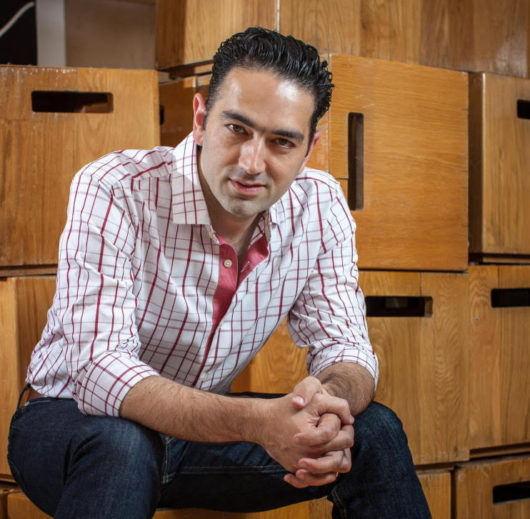
by Dora Sieber